Carbon is used throughout steel and metallurgy as a reductant, fuel, and processing agent.
Our biocarbon is a direct drop-in replacement for met coal, coke, anthracite, and petroleum coke, requiring no process changes and no capital investment.
Price stability
Long-term offtake pricing independent of coal and coke commodity markets, insulated from the supply chain disruptions that drive fossil carbon volatility.
Localized supply chains
Production from regional biomass sources with shorter, more resilient logistics than imported fossil carbon. Multiple origins reduce single-point-of-failure risk.
Specification control
Fixed carbon, volatile matter, sizing, and density tailored to your process. Custom form factors and agglomeration to match furnace and material handling requirements.
Carbon cost avoidance
Biogenic carbon is zero-rated under emissions trading systems. As carbon pricing tightens globally, the delivered cost advantage over fossil carbon grows.
Green premium
Biocarbon-produced metals command price premiums from OEMs and end-users with Scope 3 reduction targets, turning a cost input into a value differentiator.
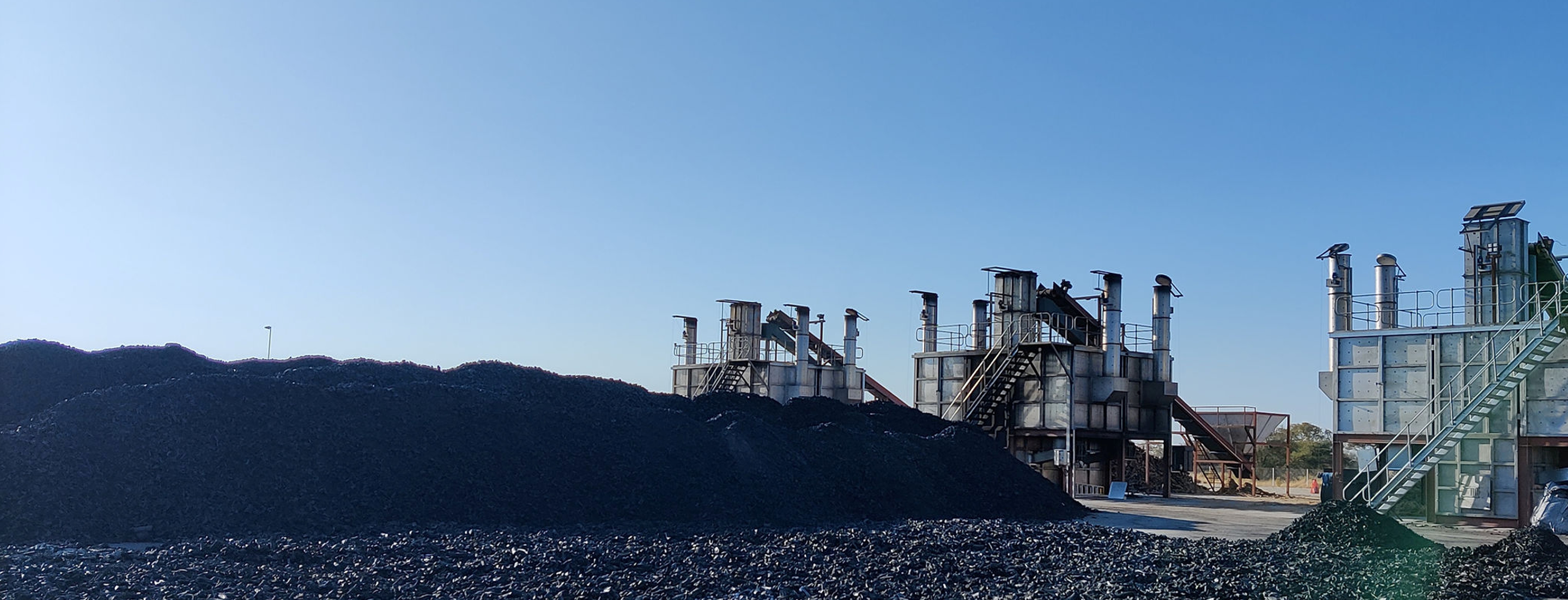
Drop-in biocarbon addresses this by replacing fossil carbon inputs while maintaining the same metallurgical performance.
Even as the industry transitions to electric arc furnaces, hydrogen-DRI, and other new production routes, solid carbon inputs remain essential.
As carbon pricing mechanisms expand globally, the economic case for substitution strengthens alongside the environmental one.
Biocarbon replaces fossil carbon across the value chain
Reductants
Direct substitute for coke, anthracite, and petroleum coke in submerged arc furnaces, blast furnaces, and electric arc furnaces. Used in silicon, manganese, and chromium smelting, and in iron ore reduction.

Injection and charge carbon
Pulverized or granular biocarbon for blast furnace tuyere injection and EAF charge carbon. Supports slag foaming, carbon correction, and energy input in steelmaking operations.

Carburizers
Carbon addition for foundry and steelmaking applications where precise carbon content control is required in the final metal product.
We work with customers to develop custom form factors and agglomeration approaches for specific furnace conditions and material handling systems.
Available specifications
Drawing on tens of thousands of tonnes of active production across multiple feedstocks and origins.
Our projects process a range of forestry and agricultural feedstocks. Fixed carbon and volatile matter are adjustable via process parameters. Physical form, sizing, and bulk density are tailored via agglomeration to match specific furnace requirements and material handling systems.
Committed to leading sustainability and chemical safety standards





Talk to our team
Reach out to discuss product specifications, test results, and supply terms.